Paediatric reference ranges load here when you open this panel. See the full table of normal values.
Case Complete
What this deck covers
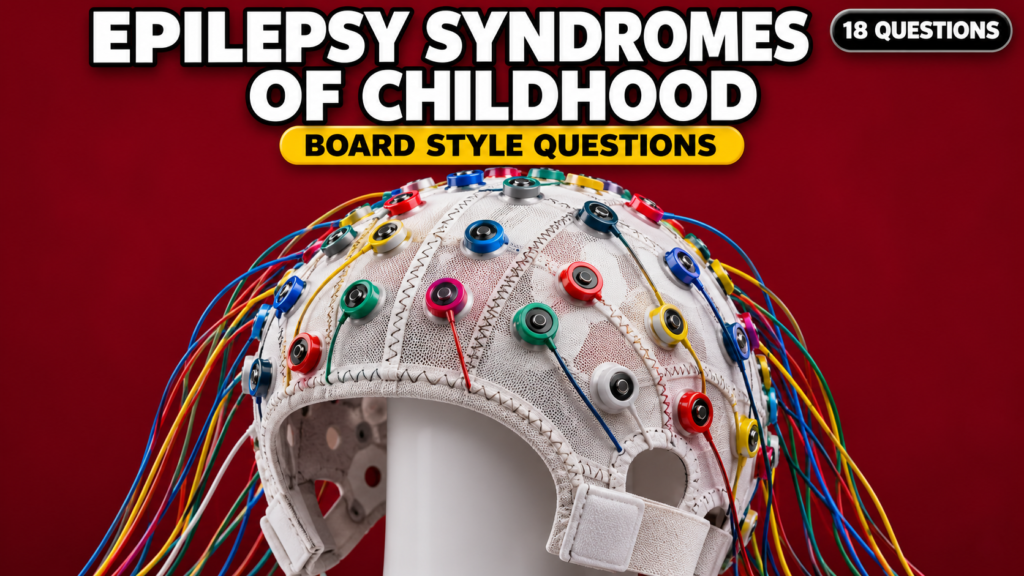
childhood absence epilepsy in 18 board-style clinical cases with worked explanations. Each case gives you a clinical vignette, four options, the correct answer, and an explanation of why each of the other three is wrong, with the guideline or textbook it follows named on the answer.
Board-style teaching questions for paediatricians and trainees preparing for paediatric board, MRCPCH and licensing examinations. Written from published guidelines and standard paediatric textbooks, with the source named on every answer.
The 18 cases, in order
- What the tracing showed
- Not just daydreaming
- Two kinds of seizure
- What happens by sixteen
- Bottom of the class now
- Starting at twelve
- A word with the school
- The next baby
- Too young, and not settling
- Counting them properly
- Thinking about stopping
- Jerks with the blank spells
- Off her food this fortnight
- The flicker in the games room
- The tracing came back normal
- Lips and fingers moving
- Slower, and not so clean
- Do we need bloods
Diagnoses and management options tested
Across the 18 cases you are asked to choose between options such as: A chaotic high-voltage disorganised background, They cannot be interrupted by touch or voice, Carbamazepine, given twice daily by mouth, Lifelong daily medication will be needed, Cognitive testing, with support at his school, Medication can be stopped within a year, Move him to a class for children with difficulties, It is X-linked, so only boys are at risk, Paired cerebrospinal fluid and blood glucose, A repeat sleep-deprived recording each month, The number of absences she had at diagnosis, A separate movement disorder needing levodopa, These effects often settle; give doses with food, Proof that the diagnosis must be reconsidered.
Clinical pearls from this deck
- Three per second generalised discharge is the hallmark.
- If touch and voice cannot stop it, it is not daydreaming.
- Absences plus convulsions: a broad-spectrum drug is needed.
- Typical absences usually stop during the teenage years.
- Absences controlled but struggling: assess attention.
- Blank spells starting at twelve: expect long treatment.
Work through the deck once for recognition, then again a week later to test yourself — each question gives the answer and explains why every other option fails.
More from this system: all Neurology case decks · pediatric reference values.