Paediatric reference ranges load here when you open this panel. See the full table of normal values.
What this deck covers
Recurrent Tonsillitis & Tonsillectomy in ten clinical teaching cases with worked explanations. Each case gives you a clinical vignette, four options, the correct answer, and an explanation of why each of the other three is wrong.
Diagnoses and management options tested
Across the ten cases you are asked to choose between options such as: Viral pharyngitis, Group A Streptococcal pharyngitis, Infectious mononucleosis, Peritonsillar abscess, Empiric antibiotic therapy, Rapid antigen detection test, Throat culture only, Complete blood count, Grade 1+, 3 episodes, Temperature greater than 38.3°C, Watchful waiting, Tonsillectomy may be considered, Long-term prophylactic antibiotics, Adenoidectomy only, Recurrent Group A Streptococcal pharyngitis, Cyclic neutropenia, Kawasaki disease, Oral amoxicillin and discharge, Immediate tonsillectomy, Needle aspiration or incision and drainage, Intravenous corticosteroids only, Advise ice water and observation, Referral for tonsillectomy, Daily prophylactic amoxicillin.
Clinical pearls from this deck
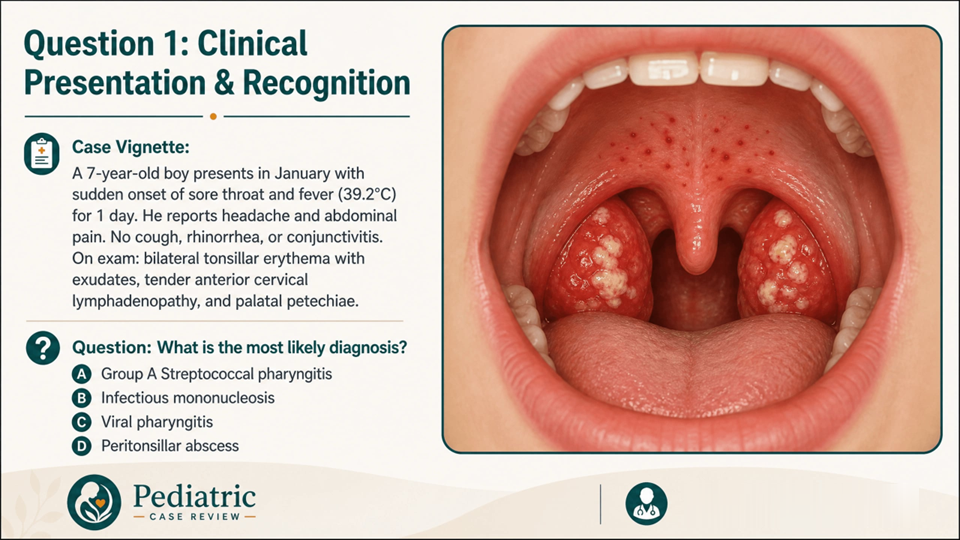
- The classic GAS tetrad — fever, tonsillar exudate, tender anterior cervical nodes, and absence of viral features (no cough/rhinorrhea) — makes group A strep highly likely in a school-aged child. Viral pharyngitis carries cough/coryza; mono has diffuse adenopathy and fatigue; PTA gives a muffled voice and asymmetric swelling.
- In children, a rapid antigen detection test (RADT) is the preferred first test — instant results guide prompt treatment. Because RADT sensitivity is lower in kids, a negative test gets a backup throat culture. Empiric antibiotics without testing is discouraged for stewardship.
The ten worked cases in this deck, with the images and the full explanation of every option, are part of Pediatric Case Review membership. See what is included.
More from this system: all ent decks and question sets · pediatric reference values.