ENT Cases
Ear, nose and throat problems are the commonest reason a child is brought to a doctor, and the case mix reflects that. The questions are rarely about rare disease. They are about the ordinary presentation with the detail that changes management.
The recurring pattern is the finding that takes the diagnosis away from you. Drooling and a muffled voice with no barking cough is not croup. A unilateral foul nasal discharge in a toddler is not rhinitis. A neck mass that has been there since birth is not lymphadenitis. Ear pain that is worse on moving the pinna is not otitis media. In each case the stem is built around a single discriminating sign, and every wrong option is a diagnosis that fits everything except that sign.
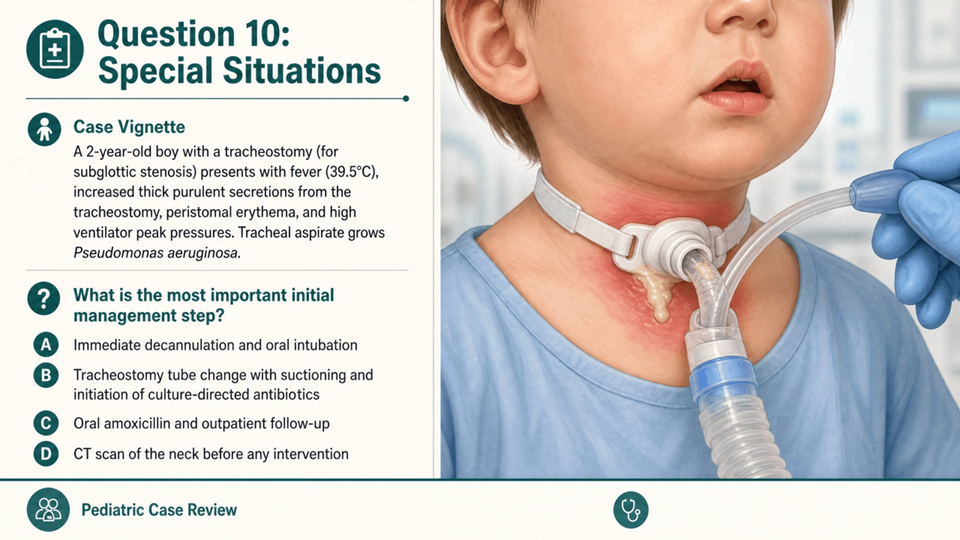
The second theme is the airway you must not touch. Epiglottitis, a retropharyngeal abscess and a severely obstructed child all share one rule: nothing that agitates the child until the airway is secure. No tongue depressor, no supine positioning, no cannula, no bloods. All four appear as tempting answers.
The third is antibiotics: when, and which. Most acute otitis media in an older, well child does not need them immediately; a child under six months, bilateral disease, perforation or systemic illness does. Recurrent tonsillitis has explicit numeric criteria for tonsillectomy, and they are worth memorising.
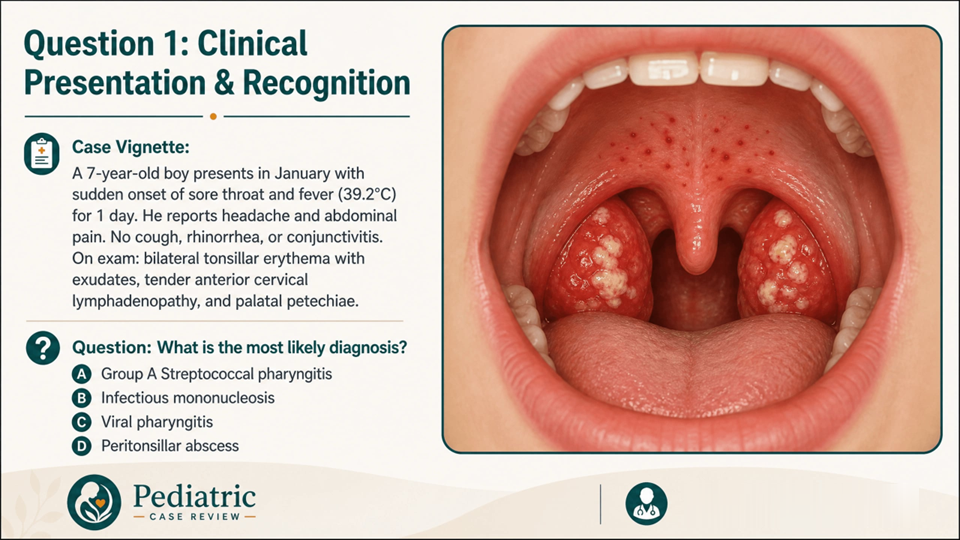
The decks below are image-based clinical cases, each with the correct answer and an explanation of why the other options fail. Audiology, hearing screening and syndromic hearing loss have their own decks — those questions reward memorised criteria more than reasoning, so leave them until later in your revision.