Paediatric reference ranges load here when you open this panel. See the full table of normal values.
Case Complete
What this deck covers
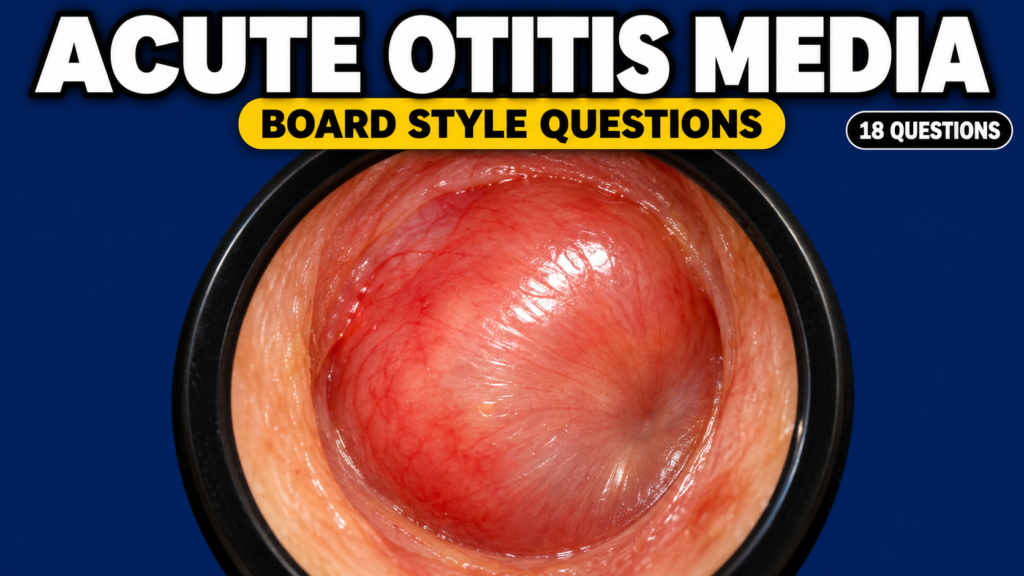
otitis media with effusion in 18 board-style clinical cases with worked explanations. Each case gives you a clinical vignette, four options, the correct answer, and an explanation of why each of the other three is wrong, with the guideline or textbook it follows named on the answer.
Board-style teaching questions for paediatricians and trainees preparing for paediatric board, MRCPCH and licensing examinations. Written from published guidelines and standard paediatric textbooks, with the source named on every answer.
The 18 cases, in order
- A quiet ear
- A flat trace
- Give it time
- The next step
- Around the theatre
- Working loose
- A wet tube
- Something to try
- While he is asleep
- One ear only
- How much it costs
- Weeks later
- Short-term fixes
- White marks
- Back again
- Two peaks
- One test is not enough
- Fluid, not pus
Diagnoses and management options tested
Across the 18 cases you are asked to choose between options such as: A hole in the drum with discharge coming through, A drum that cannot move because fluid lies behind it, Insert ventilation tubes on the next available operating list, A further three months of watchful waiting and review, A hearing aid on each side while the fluid persists, They have blocked and dropped into the middle ear space, The canal skin is infected and needs a wick, Avoiding all dairy products until the fluid clears, Adenoidectomy at the same time, reducing repeat surgery, Wax impacted deeply against the left eardrum surface, No measurable loss at all on either side, A pocket of skin developing in the upper drum, Neither changes how the ears are six months later, Skin growing into the drum, which needs surgery now.
Clinical pearls from this deck
- A dull drum with a fluid level and no pain at all.
- A flat trace means a drum that will not move at all.
- Most effusions clear on their own within three months.
- Three months of fluid and a measured loss: tubes.
- A hearing aid is the route when surgery is unwise.
- Tubes work their own way out within about a year.
Work through the deck once for recognition, then again a week later to test yourself — each question gives the answer and explains why every other option fails.
More from this system: all ENT and ophthalmology case decks · pediatric reference values.