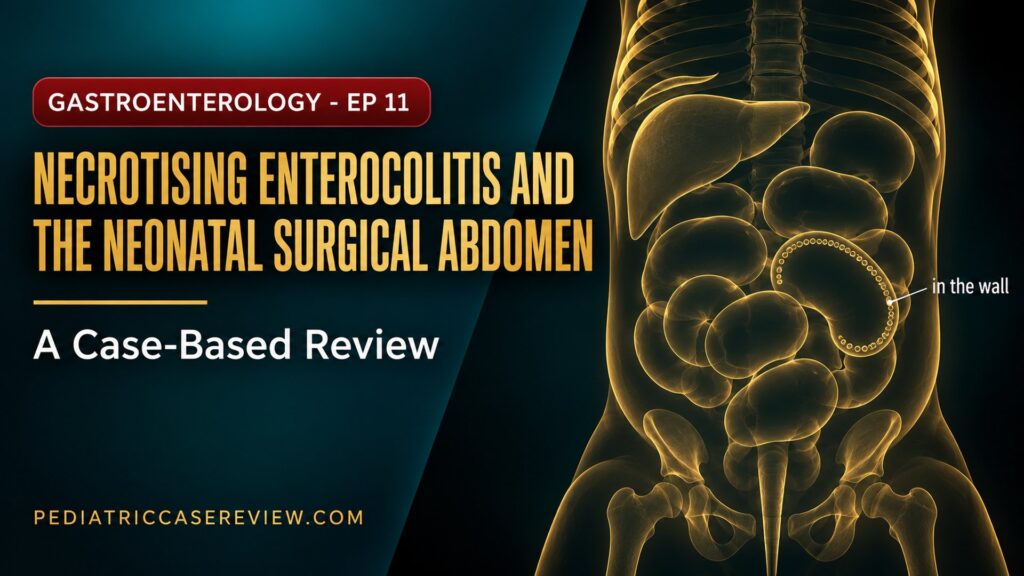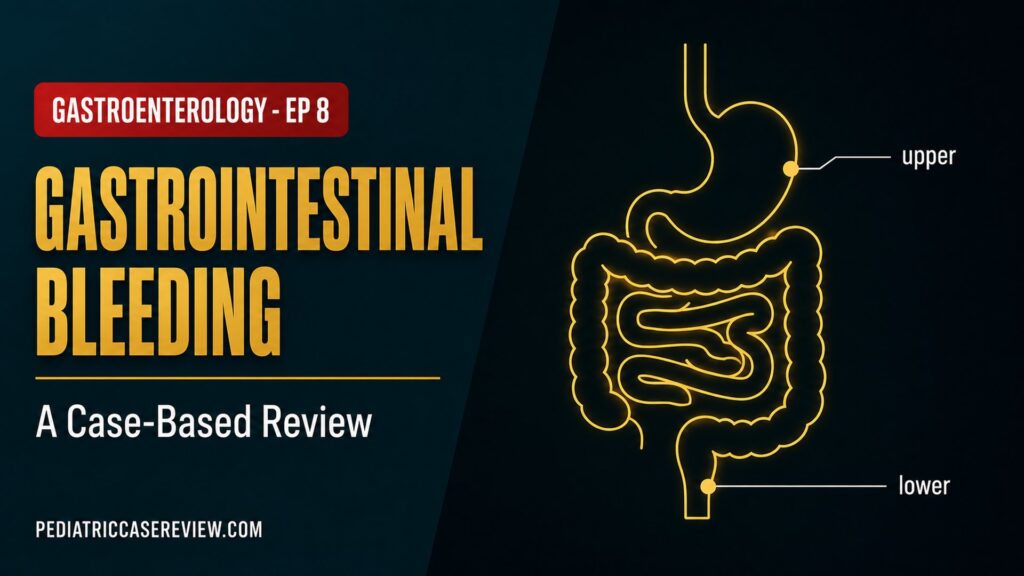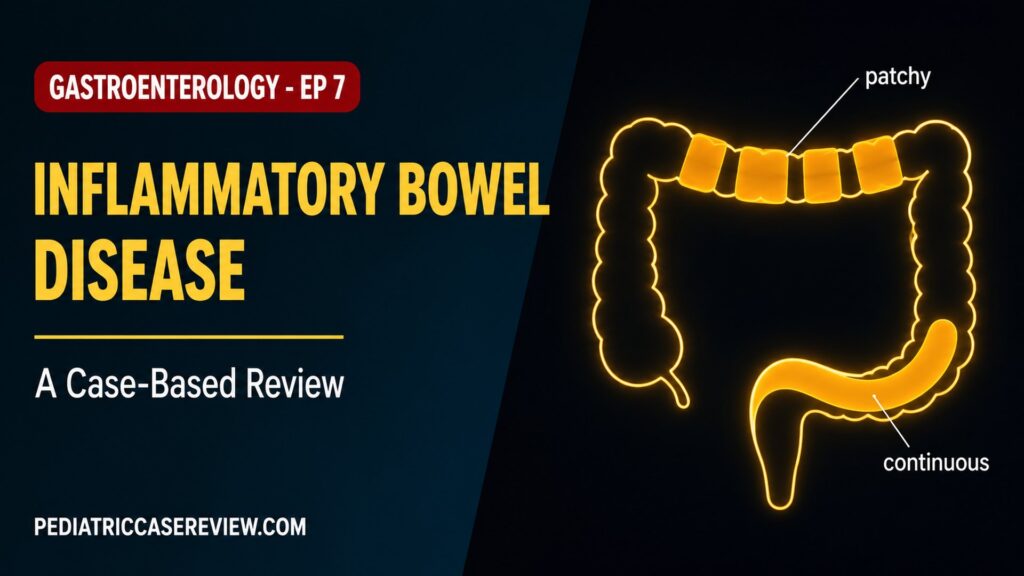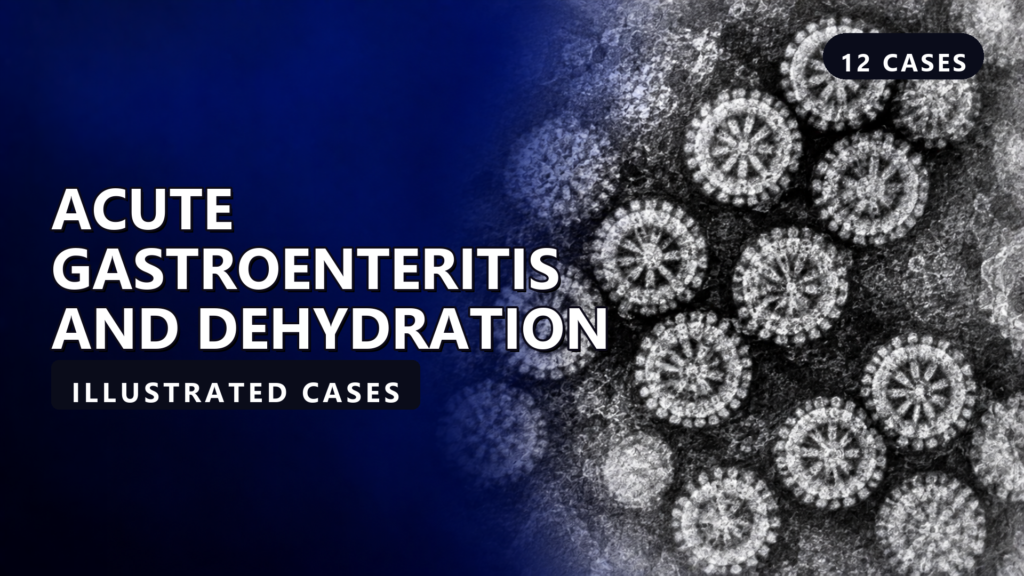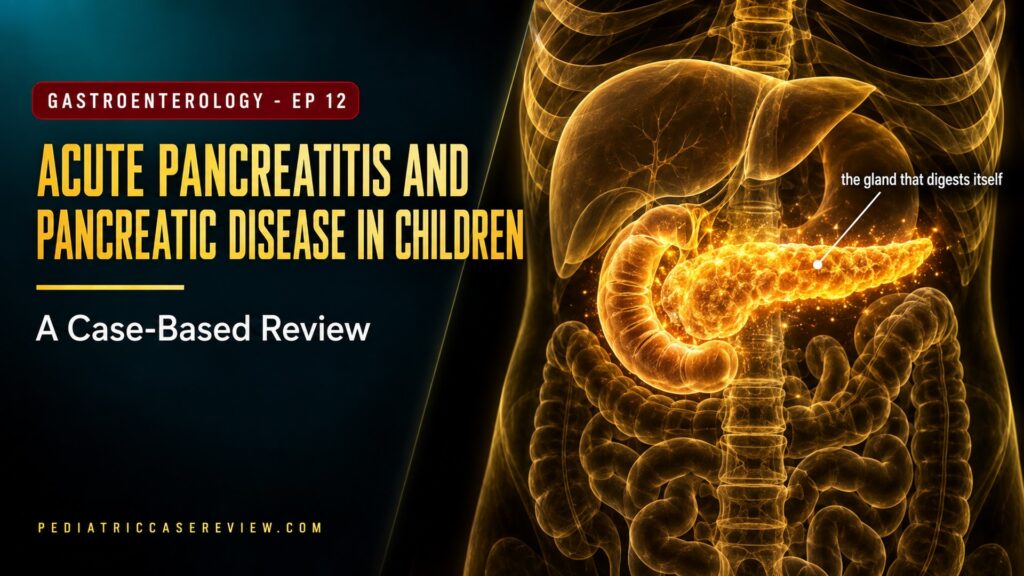
Gastroenterology Cases
Gastroenterology sits beside respiratory medicine at the top of the paediatric exam-yield table, and most of its marks are decided at the bedside rather than in the endoscopy suite. Vomiting, diarrhoea, dehydration, the yellow baby and the child who fails to grow account for the bulk of the questions.
The single most repeated discipline is earning the diagnosis before treating it. Gastroenteritis is a diagnosis the red flags let you keep: bilious vomiting in an infant is malrotation until a contrast study says otherwise, blood with pain is intussusception, and vomiting without diarrhoea belongs to raised pressure, DKA and sepsis before it belongs to the gut. The stems are written to see whether the mimic takes the case away from you.
The second theme is fluid arithmetic done out loud. Grade the deficit from behaviour first, rehydrate through the mouth when the mouth works, reserve the bolus for shock, and slow everything down when the sodium is high. The numbers are few and always the same – 75 ml/kg over four hours, 20 ml/kg isotonic in minutes, a sodium fall under 0.5 mmol/L per hour – and the exam expects them exactly.
The third is what follows the acute illness: the complication arcs the questions love – bloody diarrhoea to haemolytic uraemic syndrome, rotavirus to a lactose-intolerant fortnight – plus early refeeding, the vaccine calendar, and the 48-hour nursery rule every parent actually asks about.
Each case deck below works these decisions as full vignettes with explanations for every option, the discriminating findings, and the reference values the stem quotes.
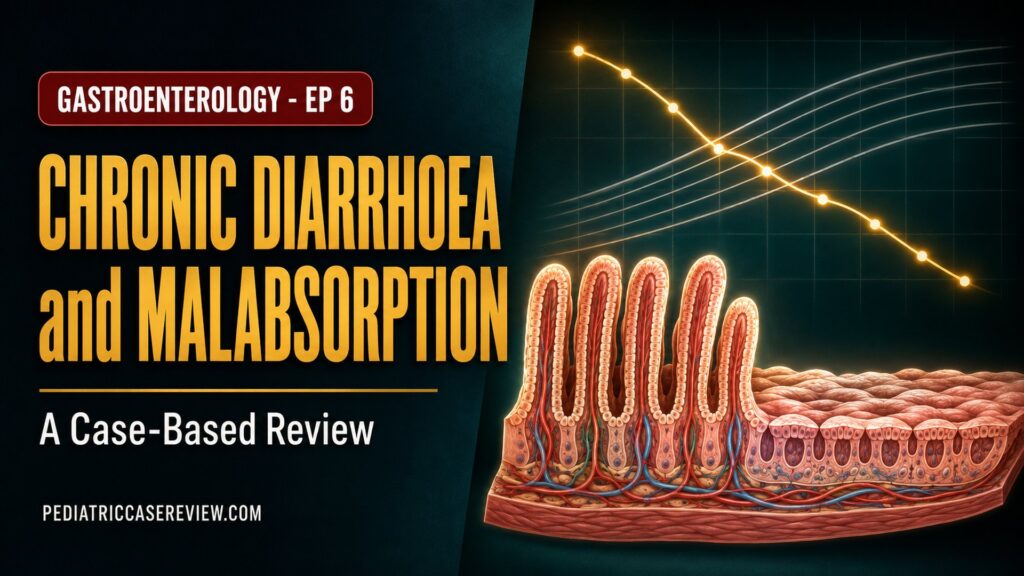
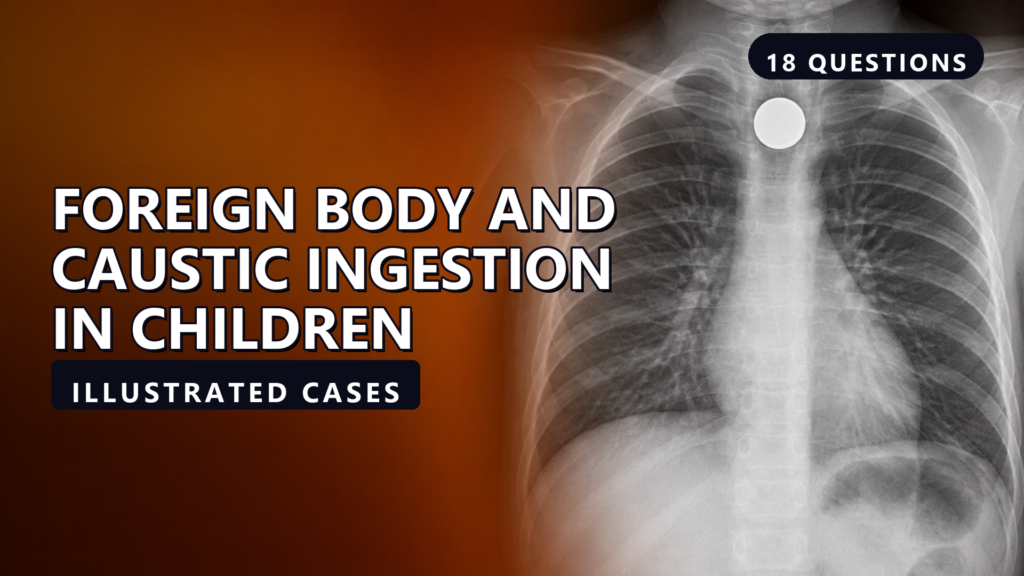
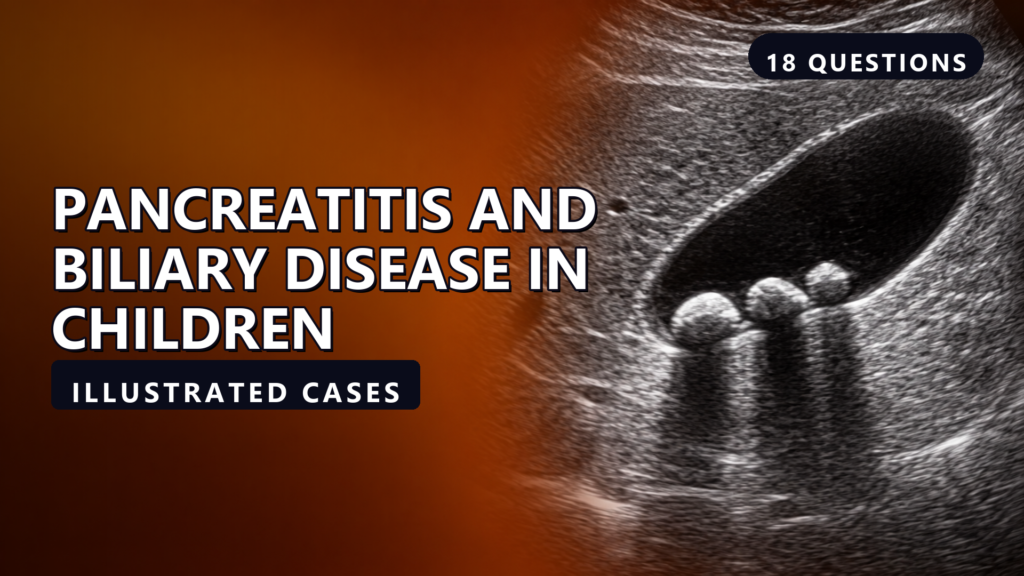
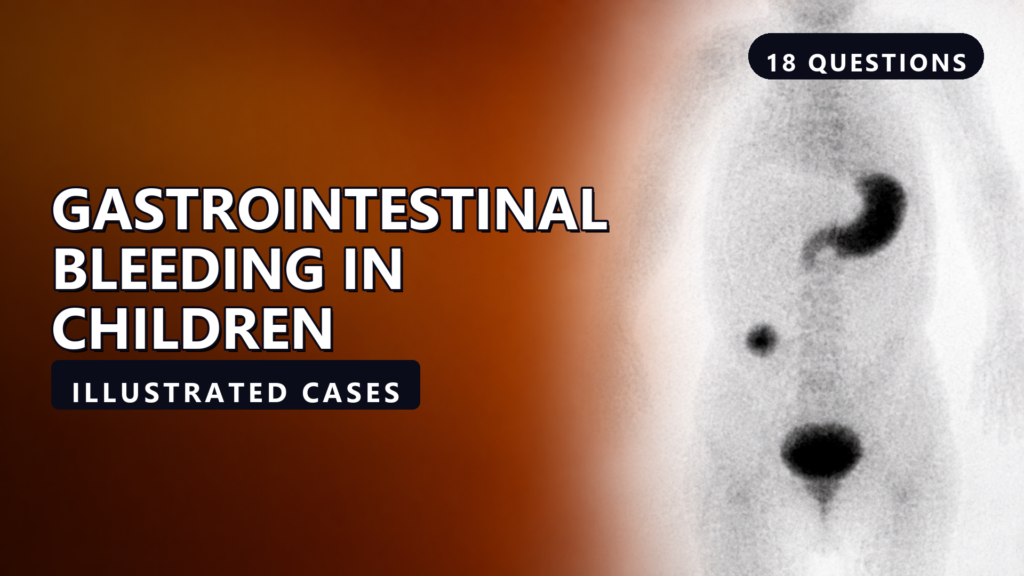
These decks are the illustrated line of the site: every case is built around clinical images, radiology, blood films and teaching illustrations, with the reference range printed beside every value a stem quotes. That visual, data-interpretation style of practice is what MRCPCH AKP rewards, and it serves candidates preparing for Saudi and Gulf licensing examinations such as the Arab Board just as well. For bank-style drilling by topic, the board questions section is the companion shelf – here, the case shows you the film, the plate, or the sign itself.