Paediatric reference ranges load here when you open this panel. See the full table of normal values.
Case Complete
What this deck covers
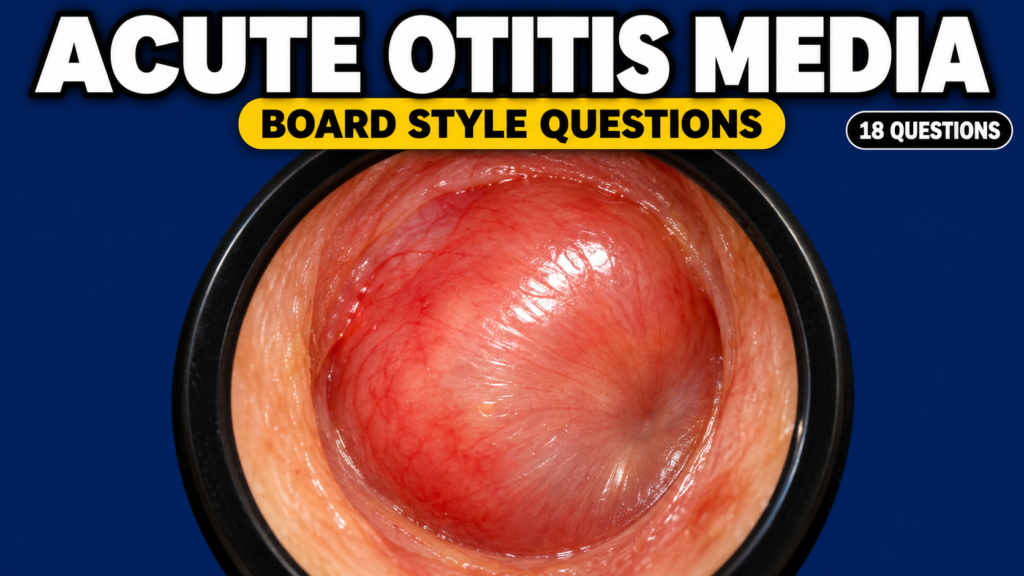
mastoiditis and the complications of otitis in 18 board-style clinical cases with worked explanations. Each case gives you a clinical vignette, four options, the correct answer, and an explanation of why each of the other three is wrong, with the guideline or textbook it follows named on the answer.
Board-style teaching questions for paediatricians and trainees preparing for paediatric board, MRCPCH and licensing examinations. Written from published guidelines and standard paediatric textbooks, with the source named on every answer.
The 18 cases, in order
- Behind the pinna
- The missing crease
- Worse in the second week
- Soft in the centre
- What the pictures showed
- Enough without an operation
- Letting the ear out
- Opening the bone
- The face droops
- Where the clot came from
- The temperature chart
- Stiff on the third day
- Three weeks later
- What the surgeon found
- Down into the neck
- Will she hear again
- Three months on
- Choosing the cover
Diagnoses and management options tested
Across the 18 cases you are asked to choose between options such as: Inflammation confined to the cartilage of the outer ear and lobe, The ear itself is pushed downwards and outwards, A second, unrelated virus has caused the new fever, A vein draining the scalp has become blocked at that point, The walls between the air cells dissolved into a single cavity, An oral antibiotic at home with a review in one week, A swab taken from the nose and from the throat, Placing a drain through the skin without touching any bone, The nerve lies in a thin-walled canal within the infected bone, Leave the ear alone while the clot is treated medically, A dry ear canal with no discharge on inspection, Pain from the ear making him hold his neck quite still, A collection has formed within the temporal lobe, The appearance is incidental and that plane should be left entirely alone.
Clinical pearls from this deck
- A boggy swelling over the bone behind the ear.
- Lost crease and a displaced pinna: think mastoid.
- Relapse after treated otitis: look behind the ear.
- A fluctuant swelling means pus that needs draining.
- Cell walls gone into one cavity: coalescent disease.
- No collection and no spread: treat and watch closely.
Work through the deck once for recognition, then again a week later to test yourself — each question gives the answer and explains why every other option fails.
More from this system: all ENT and ophthalmology case decks · pediatric reference values.